


30 September 2026 Navratri 2026: Astrological Significance, Spiritual Practices, Remedies & Zodiac Guidance
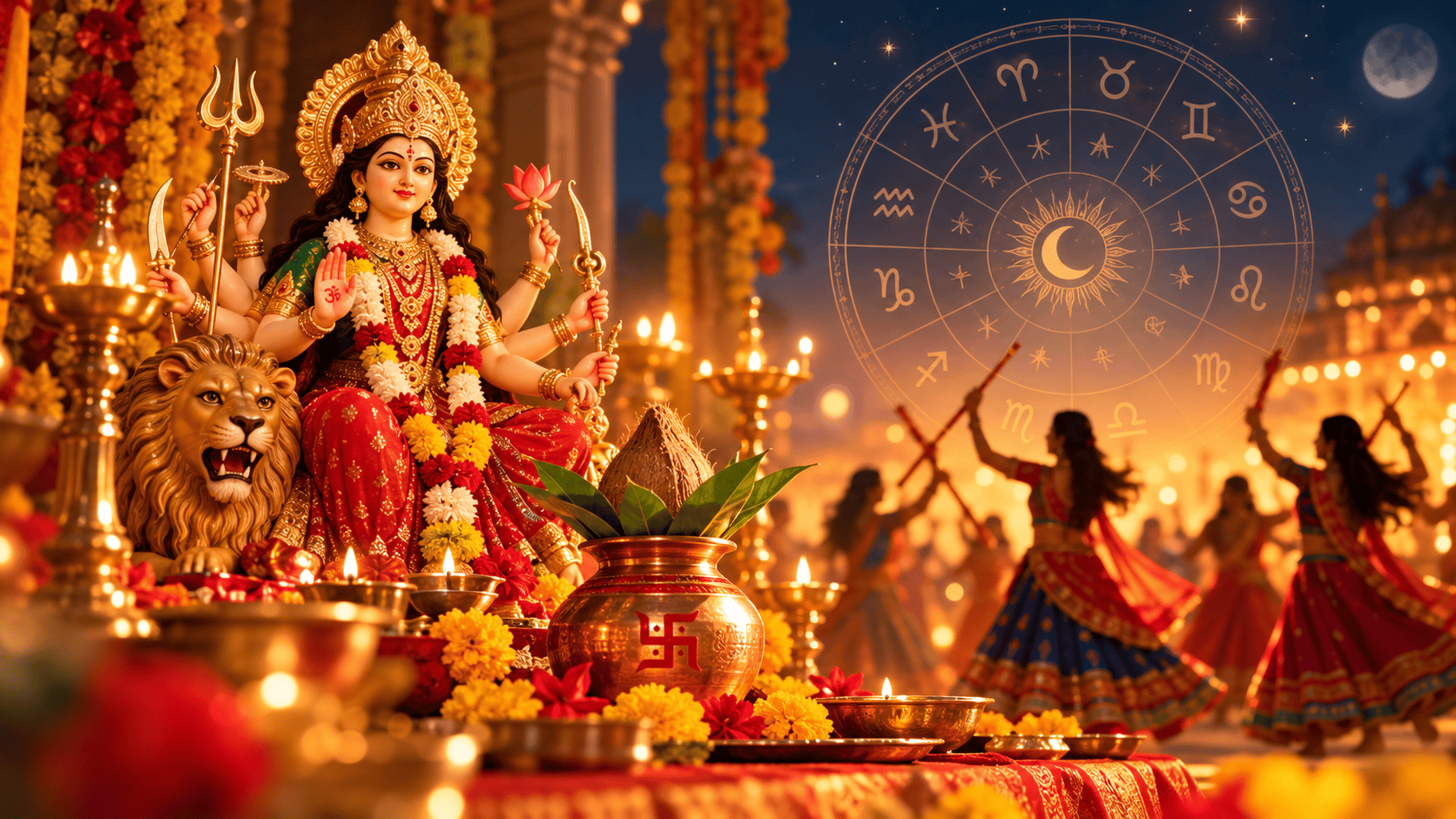
Navratri is one of the most spiritually significant festivals in the Hindu tradition, celebrated over nine nights in devotion to Maa Durga and the divine feminine energy known as Shakti. The festival is observed through prayer, fasting, mantra chanting, meditation, temple worship, Garba, Dandiya, and other regional traditions.
Beyond its religious and cultural importance, Navratri is also an important period for people who follow Vedic astrology and traditional spiritual practices. Many devotees use these nine days for self-reflection, spiritual discipline, devotional practices, and strengthening positive qualities such as courage, patience, compassion, awareness, and inner stability.
From an astrological perspective, Navratri can be explored as a time for reflection on planetary symbolism, personal habits, spiritual goals, and traditional remedies. However, interpretations may differ between astrologers and spiritual lineages. These practices are best understood within their traditional and cultural context rather than as guaranteed methods for changing life circumstances.
At White Lotus Spirituality, Vedic astrology and spiritual traditions are approached with respect and a practical perspective. This Navratri 2026 Guide explains the festival’s spiritual significance, the Nine Forms of Maa Durga, traditional remedies, zodiac-wise themes, and practices that devotees may consider during this sacred period.
What Is the Astrological Significance of Navratri?
Navratri is primarily a religious festival dedicated to Maa Durga and the divine feminine energy of Shakti. At the same time, people who follow Vedic astrology may explore the period from an additional spiritual perspective.
Vedic astrology traditionally examines planetary positions and their relationship with an individual’s birth chart. During spiritually significant periods such as Navratri, some practitioners may recommend devotional practices, mantra chanting, meditation, fasting, charity, or other traditional remedies according to an individual’s circumstances and beliefs.
The nine days of Navratri also provide a structured opportunity for personal reflection. Each form of Maa Durga is associated with different symbolic qualities, including strength, devotion, courage, creativity, compassion, determination, transformation, peace, and wisdom.
These qualities can be used as themes for self-reflection. For example, a person experiencing uncertainty may focus on courage and stability, while someone seeking greater discipline may use the festival as an opportunity to establish a consistent spiritual routine.
It is important to understand that there is no single universally accepted astrological system that assigns each form of Maa Durga to a specific planet. Different traditions and astrologers may interpret these relationships differently. Therefore, devotional symbolism and established principles of Vedic astrology should not automatically be treated as identical.
Navratri 2026 Dates and Traditional Observance
Sharad Navratri 2026 is expected to begin on 11 October 2026 and continue through 19 October 2026, with Vijayadashami expected on 20 October 2026.
Exact tithi, puja, and muhurat timings can vary depending on geographical location and Panchang calculations. Devotees should therefore check a reliable local Panchang for the precise timing of Ghatasthapana, daily worship, Ashtami, Navami, and Vijayadashami rituals.
Navratri is celebrated in different ways throughout India. Gujarat is particularly known for Garba and Dandiya Raas, while West Bengal observes the festival through elaborate Durga Puja celebrations. In several other regions, devotees focus on fasting, temple worship, devotional singing, prayer, and traditional rituals.
The form of celebration may differ, but the underlying themes of devotion, Shakti, spiritual discipline, and inner transformation remain important parts of the festival.
Nine Forms of Maa Durga and Their Spiritual Significance
The Nine Forms of Maa Durga, collectively known as Navadurga, are traditionally worshipped during the nine days of Navratri. Each form represents a different aspect of divine feminine energy and provides a symbolic theme for spiritual reflection.
| Day | Form of Maa Durga | Key Quality | Navratri Reflection |
| Day 1 | Maa Shailputri | Strength & Stability | Focus on grounding, discipline, responsibilities, and building a stable foundation. |
| Day 2 | Maa Brahmacharini | Devotion & Patience | Reflect on consistency, spiritual discipline, patience, and maintaining a meaningful routine. |
| Day 3 | Maa Chandraghanta | Courage & Awareness | Focus on facing fears, improving awareness, and developing inner courage. |
| Day 4 | Maa Kushmanda | Creativity & Vitality | Reflect on creativity, positive energy, gratitude, and the use of personal abilities. |
| Day 5 | Maa Skandamata | Compassion & Nurturing | Focus on family, kindness, emotional support, gratitude, and caring for others. |
| Day 6 | Maa Katyayani | Determination & Strength | Reflect on challenges, confidence, responsible action, and perseverance. |
| Day 7 | Maa Kalaratri | Fearlessness & Transformation | Use the day for deeper self-reflection and identifying unhelpful patterns. |
| Day 8 | Maa Mahagauri | Peace & Purity | Focus on calmness, forgiveness, emotional balance, compassion, and clarity. |
| Day 9 | Maa Siddhidatri | Wisdom & Understanding | Reflect on spiritual lessons, gratitude, and greater self-awareness. |
Maa Shailputri – Strength and Stability
Maa Shailputri is worshipped on the first day of Navratri. She is traditionally associated with strength, stability, grounding, and determination.
Her symbolism can encourage devotees to reflect on their foundations, responsibilities, personal values, and long-term intentions. From a spiritual perspective, the first day can be used to establish discipline and create a calm beginning for the nine-day observance.
Maa Brahmacharini – Discipline and Devotion
Maa Brahmacharini represents devotion, patience, perseverance, and spiritual discipline.
Her symbolism reminds devotees that meaningful personal development often requires consistency. Prayer, meditation, mantra chanting, and maintaining a disciplined routine can become valuable practices during this phase of Navratri.
Maa Chandraghanta – Courage and Awareness
Maa Chandraghanta is traditionally associated with courage, protection, awareness, and strength.
Devotees may use this day to reflect on fear, uncertainty, and challenging circumstances. Rather than focusing only on external difficulties, the day can encourage greater awareness of one’s thoughts, reactions, and choices.
Maa Kushmanda – Creativity and Vitality
Maa Kushmanda is traditionally associated with creative energy and cosmic creation.
Her symbolism can inspire reflection on creativity, vitality, gratitude, and the positive abilities that individuals bring into their personal and professional lives. It can also be a useful time to consider whether daily routines leave enough space for creativity and positive expression.
Maa Skandamata – Compassion and Nurturing
Maa Skandamata represents nurturing, compassion, protection, and motherly love.
This day can encourage reflection on family relationships, empathy, kindness, and emotional support. Devotional activities involving gratitude, helping others, or spending meaningful time with family can become part of the observance.
Maa Katyayani – Determination and Strength
Maa Katyayani is traditionally associated with courage, strength, determination, and confronting obstacles.
Her symbolism can inspire devotees to approach difficulties with greater confidence and responsible action. It can also encourage reflection on areas where patience, discipline, and determination are needed.
Maa Kalaratri – Fearlessness and Transformation
Maa Kalaratri has a fierce appearance but is traditionally revered as a protective form of Goddess Durga.
She is associated with overcoming fear, removing ignorance, and transformation. This day can be used for deeper introspection and identifying habits, fears, or behavioural patterns that may need positive change.
Maa Mahagauri – Peace and Purity
Maa Mahagauri is traditionally associated with purity, serenity, peace, and spiritual clarity.
Her symbolism encourages individuals to focus on calmness, forgiveness, compassion, and harmony. Meditation, prayer, and quiet reflection may be meaningful practices during this phase of Navratri.
Maa Siddhidatri – Wisdom and Spiritual Understanding
Maa Siddhidatri is the ninth form of Navadurga and is traditionally associated with wisdom, spiritual understanding, blessings, and fulfilment.
The final day of Navratri can be a time to look back on the nine-day spiritual journey, express gratitude, and reflect on the qualities that one wishes to carry forward into everyday life.
Navratri and the Navagraha: Is There a Connection?
One interesting aspect of exploring Navratri and Vedic astrology is the presence of the number nine in both traditions.
Vedic astrology traditionally recognises the Navagraha, or nine planetary influences, while Navratri celebrates the nine forms of Goddess Durga. However, the two concepts should not automatically be considered the same system.
Some spiritual traditions explore symbolic relationships between planetary influences, devotional practices, mantras, and forms of Shakti. These interpretations may vary according to lineage, regional tradition, and individual astrologers.
Therefore, when exploring Navratri through an astrological lens, it is useful to distinguish between traditional symbolism and principles that are more broadly established within Jyotish.
Traditional Navratri Remedies According to Vedic Astrology
Navratri is often considered a meaningful period for devotional and spiritual practices. Traditional remedies followed during this period may include prayer, mantra chanting, meditation, fasting, charity, temple worship, and devotional reading.
Depending on an individual’s beliefs and astrological tradition, some people may also explore personalised practices based on their birth chart.
Common traditional practices may include:
- Chanting Durga-related mantras.
- Spending time in prayer and meditation.
- Visiting a temple dedicated to Goddess Durga.
- Following a traditional fasting routine according to personal circumstances and customs.
- Donating food, clothing, or other useful items.
- Helping people who are in need.
- Maintaining a disciplined daily routine.
- Reading devotional scriptures or traditional spiritual literature.
- Practising gratitude and self-reflection.
- Participating respectfully in community celebrations.
Astrological remedies should be considered in context. A remedy traditionally recommended for one person may not necessarily be suitable or meaningful for everyone. Personal circumstances, family traditions, health considerations, and individual beliefs should always be taken into account.
Zodiac-Wise Navratri Guidance for 2026
Navratri can also be approached through zodiac-wise reflection. Rather than treating zodiac guidance as a fixed prediction, each zodiac sign can be associated with a broad personal-development theme.
Aries
Aries individuals may use Navratri as a time to reflect on courage, patience, and responsible action. The festival can provide an opportunity to balance enthusiasm with thoughtful decision-making.
Taurus
For Taurus, Navratri can be a period to focus on stability, gratitude, family values, and emotional balance. Maintaining a consistent spiritual routine may provide a meaningful structure during the festival.
Gemini
Gemini individuals may focus on mental clarity, communication, learning, and reducing unnecessary distractions. Meditation and devotional reading can provide opportunities for quieter reflection.
Cancer
Cancer individuals may use Navratri to reflect on family, emotional security, nurturing relationships, and gratitude. The festival can provide a meaningful opportunity to appreciate supportive relationships.
Leo
For Leo, Navratri can encourage reflection on confidence, leadership, humility, and the responsible use of personal strengths. Balancing confidence with consideration for others can become a useful theme.
Virgo
Virgo individuals may focus on discipline, organisation, self-awareness, and maintaining balance between responsibilities and personal wellbeing.
Libra
Libra may use this period to reflect on relationships, harmony, cooperation, and emotional balance. Kindness and peaceful communication can become important themes.
Scorpio
Scorpio individuals may focus on transformation, emotional awareness, courage, and releasing unhelpful habits. The spiritual symbolism of Navratri can encourage deeper introspection.
Sagittarius
Sagittarius may use the festival to focus on learning, spiritual exploration, personal beliefs, and traditional knowledge. Reading and reflection can become meaningful activities.
Capricorn
For Capricorn, Navratri can encourage reflection on discipline, responsibilities, long-term goals, and patience while working toward meaningful objectives.
Aquarius
Aquarius individuals may focus on self-awareness, community participation, humanitarian values, and developing a balanced perspective toward personal and social responsibilities.
Pisces
Pisces may use Navratri for meditation, spiritual reflection, compassion, creativity, and greater inner awareness. Quiet practices can provide space for personal reflection.
Zodiac guidance is general in nature. A personalised Vedic astrology interpretation traditionally requires accurate birth date, exact birth time, and place of birth.
Which Spiritual Practices Can You Follow During Navratri?
There is no single method of observing Navratri. Families and communities follow different traditions based on their regional customs, spiritual beliefs, and personal practices.
1. Daily Prayer
Spend a few minutes in prayer and connect with your chosen form of Maa Durga. Regular prayer can create a sense of discipline and spiritual focus.
2. Mantra Chanting
Traditional Durga mantras may be included in daily worship according to one’s spiritual tradition. Consistency and sincere practice are generally more important than simply increasing the duration of chanting.
3. Meditation
Meditation can be used to create quiet time for self-awareness and concentration. Even a short daily practice can provide an opportunity to pause from routine activities.
4. Fasting
Many devotees observe fasting during Navratri. Fasting practices vary widely between families and regions. Anyone fasting should consider their individual circumstances and follow practices appropriate for their needs.
5. Charity
Offering food, clothing, or useful items to people in need is a traditional way of expressing compassion and service during Navratri.
6. Devotional Reading
Reading traditional scriptures, devotional literature, or material related to Maa Durga can deepen understanding of the festival and its symbolism.
7. Community Celebration
Garba, Dandiya, Durga Puja, and other community activities are important parts of Navratri in different regions. Participating respectfully can help people connect with cultural and devotional traditions.
8. Self-Reflection
Choose one quality associated with each day of Navratri and consider how it can be incorporated into everyday life. This can make the festival a meaningful period of personal reflection.
Can You Consult a Vedic Astrologer During Navratri?
People who follow astrology may choose to consult a Vedic astrologer during Navratri to explore their birth chart, planetary symbolism, or traditional spiritual practices.
A personalised consultation may consider birth details and the broader context of an individual’s concerns. Depending on the astrologer’s tradition, the discussion may include planetary periods, transits, traditional remedies, mantras, or spiritual practices.
However, astrology is best approached as a traditional interpretive system rather than a guarantee of future events. Personal effort, practical judgement, professional advice where appropriate, and individual circumstances remain important.
At White Lotus Spirituality, personalised Vedic astrology consultations provide an opportunity to explore personal concerns through the traditional framework of Jyotish while maintaining a thoughtful and practical approach.
When is Navratri 2026?
Sharad Navratri 2026 is expected to be observed from 11 October to 19 October, followed by Vijayadashami on 20 October. Exact dates and ritual timings should be confirmed through a reliable local Panchang.
Conclusion
Navratri 2026 offers devotees an opportunity to connect with Maa Durga through prayer, devotion, discipline, cultural traditions, and self-reflection. The Nine Forms of Maa Durga represent symbolic qualities such as courage, stability, compassion, determination, transformation, peace, and wisdom.
For people interested in astrology, Navratri can also be explored through the traditional lens of Vedic astrology, planetary symbolism, spiritual practices, and personalised reflection. At the same time, interpretations connecting devotional traditions with astrology can vary across schools and lineages.
Whether you observe Navratri through prayer, fasting, meditation, Garba, temple worship, mantra practice, or spiritual reflection, the festival can be used as a meaningful period to focus on positive values and greater self-awareness.
If you want to understand how traditional Vedic astrology may relate to your individual circumstances, a personalised astrology consultation can provide an additional perspective based on your birth details and concerns.
Explore personalised Vedic Astrology guidance with White Lotus Spirituality and use Navratri as a meaningful time for reflection, spiritual practice, and inner awareness.
Written by Dr. Santosh Sharma
Third-generation Vedic astrologer and former Air Force Wing Commander, trusted by 150,000+ clients worldwide for authentic, research-based astrological guidance.


Navratri is primarily a religious festival dedicated to Maa Durga. People who follow Vedic astrology may also use this period for spiritual reflection, mantra practice, meditation, devotional activities, and traditional remedies.
Not necessarily. General devotional practices can be followed according to tradition, while personalised astrological remedies may depend on an individual's birth chart, circumstances, and the tradition followed by the practitioner.
Traditional remedies are generally understood as spiritual or devotional practices rather than methods that literally change a birth chart. Their interpretation and significance can vary between spiritual and astrological traditions.
Yes. Prayer, meditation, devotional reading, charity, temple visits, and many other traditional Navratri practices do not require a birth chart.
General zodiac guidance is broad and is not the same as a personalised horoscope reading. A traditional personalised Vedic astrology consultation generally requires accurate birth date, exact birth time, and place of birth.
No Comments