



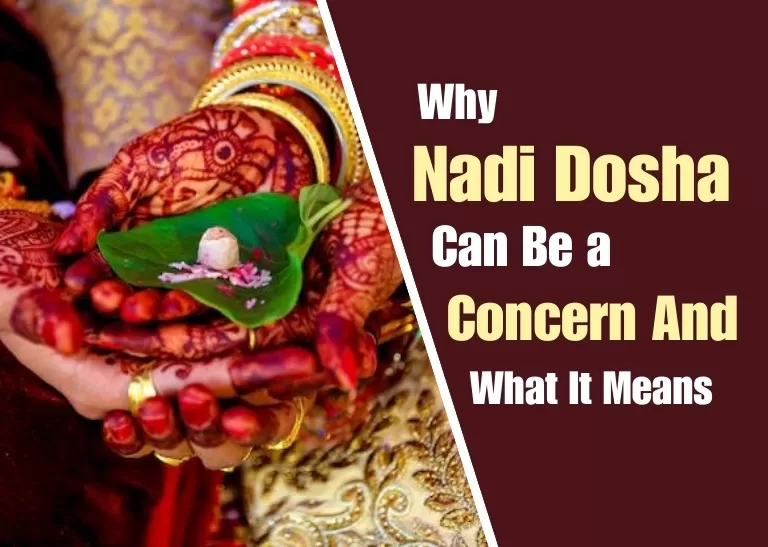
27 August 2025 Why Nadi Dosha Can Be a Concern – And What It Means
When two people consider marriage through Vedic astrology, they often use Kundali matching to understand different aspects of compatibility. One of the most discussed factors in this process is Nadi Dosha.
But what does Nadi Dosha actually mean? Why is it given importance in Kundali matching? Does having the same Nadi mean you should reject a marriage? And are there traditional ways to assess or address it?
These are common questions because Nadi Dosha accounts for 8 points out of the 36 Gunas in the Ashtakoot matching system. However, you should not interpret those 8 points independently of the rest of the horoscope.
This guide explains the traditional meaning of Nadi Dosha, how it is identified, what it is believed to indicate, possible exceptions, and why a complete horoscope assessment can provide more context.
What Is Nadi Dosha in Kundali?
Nadi Dosha is a condition considered in the Nadi Koota portion of traditional Kundali matching. In the Ashtakoot system, there are three Nadis:
- Aadi Nadi
- Madhya Nadi
- Antya Nadi
When both prospective partners share the same Nadi, Nadi Dosha is traditionally considered present.
In simple terms, the Nadi factor is one part of the broader compatibility assessment used in Kundali matching for marriage. It is traditionally associated with aspects such as physical compatibility, family life and progeny-related considerations.
However, Nadi Dosha alone does not provide a complete picture of a couple’s relationship.
What Is Nadi in Kundali?
In traditional Jyotish, Nadi is a classification used within the Nakshatra-based compatibility system.
The three categories are:
1. Aadi Nadi
Aadi Nadi is the first Nadi category. Traditional interpretations associate it with particular patterns of temperament and energy and it refers to VATA PRAKRUTI.
2. Madhya Nadi
Madhya Nadi is the second category and relates to PITTA PRAKRUTI.
3. Antya Nadi
Antya Nadi is the third category. It is related to KAFA PRAKRUTI.
How Is Nadi Dosha Determined?
If both partners are assigned the same Nadi, the traditional Ashtakoot system may result in Nadi Dosha, with zero points awarded for Nadi Koota.
If the Nadis are different, the couple may receive points under this part of the matching system.
However, Nadi Koota is only one component of Kundali matching. A complete assessment can also consider factors such as Gana, Bhakoot, Graha Maitri, Yoni, Tara, planetary placements and relevant Dasha periods.
Why Does Nadi Dosha Matter in Marriage Matching?
Nadi Dosha receives considerable attention because of its traditional association with key areas of married life.
In classical astrology-based interpretations, Nadi Koota is connected with compatibility, vitality and family-related considerations.
Some astrologers also examine it in relation to:
- Physical compatibility
- Family planning and progeny-related concerns
- General harmony between partners
- Similarities in temperament
- Long-term marital compatibility
These are traditional astrological interpretations, not medical diagnoses or guaranteed predictions.
Therefore, Nadi Dosha should be understood as one factor for discussion rather than a standalone reason to make a major life decision.
Does Nadi Dosha Always Cause Problems in Marriage?
No. The presence of Nadi Dosha does not automatically mean that a marriage will be unsuccessful.
This is one of the most important points to understand when interpreting a Kundali.
A horoscope contains many planetary combinations, and different factors can influence the overall compatibility picture. Therefore, experienced astrologers generally examine the complete charts instead of reaching a conclusion from Nadi Koota alone.
For example, the astrologer may review:
- The individual birth charts
- Moon sign and Nakshatra
- Planetary strength
- Marriage-related houses
- Venus and Jupiter
- Bhakoot and Gana
- Relevant Dasha periods
- Other traditional Nadi Dosha cancellation conditions
This broader assessment can help put the Nadi Dosha finding into context.
Can Nadi Dosha Be Cancelled?
In traditional Jyotish, certain combinations are described as Nadi Dosha cancellation or exceptions.
The exact conditions can vary by astrological tradition and the method the astrologer uses. Therefore, it is better not to assume that every same-Nadi combination has the same result.
Possible considerations may include specific similarities or differences in Nakshatra, Pada, Rashi and other planetary factors.
Some traditional approaches also examine whether the broader horoscope provides supportive combinations that reduce the significance given to the Dosha.
Because cancellation rules can be detailed, a complete Kundali comparison is generally more useful than relying on a basic online Nadi score.
What Are the Traditional Effects Associated With Nadi Dosha?
Different Jyotish traditions describe Nadi Dosha in different ways. Traditionally, it has been discussed in relation to three broad areas.
1. Compatibility Between Partners
The Nadi factor is traditionally considered while assessing whether the overall combination of the two horoscopes supports marital compatibility.
However, emotional understanding, communication and mutual respect cannot be measured through one Guna alone.
2. Family and Progeny-Related Considerations
Nadi Koota has traditionally been associated with progeny-related matters. This is one reason families may become concerned when Nadi Dosha appears during matching.
However, astrology should not be treated as a medical method for diagnosing fertility or predicting a child’s health. Fertility and reproductive concerns should always be discussed with qualified medical professionals.
3. Overall Marital Harmony
Some traditional interpretations link Nadi Dosha to differences or similarities in partners’ physical and emotional patterns.
But whether two people can build a healthy relationship depends on many real-world factors, including communication, expectations, values, financial understanding and mutual support.
Is Nadi Dosha More Important Than the Other Gunas?
Nadi Koota receives 8 points, making it the highest-weighted individual Koota in the traditional 36-Guna Ashtakoot system.
That does not mean that the remaining Gunas can simply be ignored.
Kundali matching traditionally involves multiple factors, including:
- Varna
- Vashya
- Tara
- Yoni
- Graha Maitri
- Gana
- Bhakoot
- Nadi
Each provides a different part of the compatibility assessment.
For this reason, looking only at the final Nadi score or total Guna score may not provide sufficient context for a marriage decision.
What Should You Do If Nadi Dosha Is Found?
Finding Nadi Dosha can naturally create questions for both families. Instead of immediately assuming the worst, consider the following approach.
Step 1: Verify the Birth Details
A horoscope’s accuracy depends on the birth information used to calculate it. Confirm the date, time and place of birth before interpreting the matching results.
Step 2: Review Both Complete Kundalis
Do not stop at an online Nadi score. Ask for a broader assessment of both charts.
Step 3: Check Traditional Cancellation Factors
An astrologer can examine whether any applicable traditional exceptions or cancellation conditions are present.
Step 4: Consider the Entire Compatibility Picture
Nadi is only one component. Review other compatibility indicators and relevant planetary factors as well.
Step 5: Keep Practical Compatibility in Mind
Astrology can be one traditional framework for reflection, but couples should also discuss communication, finances, family expectations, responsibilities, lifestyle and future goals.
Are There Remedies for Nadi Dosha?
Traditional Jyotish practices may recommend remedies after considering the individual horoscope.
The appropriate remedy can vary depending on the chart and the specific interpretation of the Dosha. Common traditional approaches may include:
- Specific mantra practices
- Charity or acts of service
- Religious or spiritual observances
- Nadi Dosha-related puja
- Guidance based on the individual’s horoscope
Gemstones or Rudraksha should not automatically be recommended simply because Nadi Dosha is present. In traditional astrology, such recommendations are generally connected with the broader birth chart rather than one Dosha alone.
If you are considering any spiritual remedy, it helps to understand its traditional purpose and follow it according to guidance appropriate to your horoscope.
Can Nadi Dosha Be Removed Completely?
This is another common question.
From a traditional astrology perspective, remedies are generally discussed as ways to address or balance the astrological concern rather than literally change the birth chart.
The birth chart itself remains the birth chart. What changes is the approach taken toward the concern through traditional practices, reflection and guidance.
Therefore, be cautious of anyone promising that a particular remedy will guarantee marriage success, pregnancy, health or a specific future outcome.
Should You Reject a Marriage Because of Nadi Dosha?
Nadi Dosha alone should not be treated as an automatic instruction to accept or reject a marriage.
A marriage decision involves many dimensions beyond horoscope matching. If Nadi Dosha appears, the more useful approach is to understand:
- Why the Dosha is being identified
- Whether any traditional cancellation conditions apply
- What the complete Kundali comparison indicates
- Whether other compatibility factors are supportive
- What practical concerns the couple has about marriage
This helps the couple and their families make an informed decision rather than reacting to a single score.
Why Online Nadi Dosha Results Can Be Misleading
Many websites provide instant Kundali matching results based on limited information. These tools can help you get an initial calculation, but they may not explain the full astrological context.
Two reports can sometimes appear different because of variations in calculation methods, settings or interpretation.
A detailed consultation can therefore be useful when a Nadi Dosha result raises serious concerns about a proposed marriage.
What Is the Best Way to Understand Nadi Dosha?
The most useful way to understand Nadi Dosha is to look beyond the label.
A same-Nadi result can understandably create concern, particularly when families are considering marriage. But a single Koota doesn’t describe the full relationship between two people.
A broader Kundali assessment can help examine the Nadi factor alongside Nakshatra, Rashi, Gana, Bhakoot, planetary placements and relevant Dasha periods.
At the same time, couples should discuss practical matters openly and avoid letting fear of one astrological factor replace communication and personal judgement.
Get Personalised Kundali Matching Guidance
If Nadi Dosha has appeared in your marriage matching report and you want to understand what it means in the context of both horoscopes, a personalised consultation can provide a more detailed traditional perspective.
At White Lotus Spirituality, Santosh Sharmaa Ji can review the available birth details and explain the Nadi factor together with other relevant aspects of Kundali matching.
Astrology can offer a traditional framework for reflection and guidance, but important marriage, health and family decisions should also consider practical circumstances and qualified professional advice where appropriate.

Written by Dr. Santosh Sharma
Third-generation Vedic astrologer and former Air Force Wing Commander, trusted by 150,000+ clients worldwide for authentic, research-based astrological guidance.


The three Nadis traditionally used in Nadi Koota are Aadi Nadi, Madhya Nadi and Antya Nadi.
Nadi Koota carries 8 points out of the 36 points in the traditional Ashtakoot Guna Milan system.
Nadi Dosha is traditionally considered an important compatibility factor, but its presence alone does not determine whether a marriage will work. The complete horoscope and other compatibility factors should be examined.
Traditional Jyotish describes certain conditions under which Nadi Dosha may be considered cancelled or less significant. Check the applicable conditions against both horoscopes.
Traditional astrology has associated Nadi Koota with progeny-related considerations. However, it cannot medically diagnose fertility or predict a child's health. Qualified healthcare professionals should evaluate medical concerns.
No Comments